


Air Cooling vs Liquid Cooling in Modern Bitcoin Mining
Bitcoin mining infrastructure has evolved rapidly over the past several years. Modern ASIC hardware operates at significantly higher performance levels than earlier generations, increasing both power density and thermal output. As operations continue to scale, cooling is no longer viewed as a secondary support function. It has become a critical part of operational stability, efficiency, and long term infrastructure planning.
At the same time, the growth of artificial intelligence computing has intensified industry attention around thermal management. AI data centers and Bitcoin mining facilities now face many of the same challenges related to power density, heat removal, and infrastructure scalability. As a result, conversations around cooling strategies have become increasingly important across both industries.
Why Cooling Matters More Than Ever
As hardware density increases, heat becomes one of the defining operational challenges inside mining environments. Excessive temperatures can reduce machine efficiency, shorten hardware lifespan, and increase the risk of downtime. Research from ASHRAE highlights that thermal conditions directly affect the reliability and performance of high density computing equipment (ASHRAE 2021).
Bitcoin mining is not alone in facing this issue. AI computing environments are also experiencing rapid increases in rack density and power consumption. According to the International Energy Agency, global electricity demand from data centers and AI workloads is expected to continue rising significantly in the coming years (International Energy Agency 2024). These trends are pushing both industries to rethink how cooling systems are designed and deployed.
Why Air Cooling Still Dominates
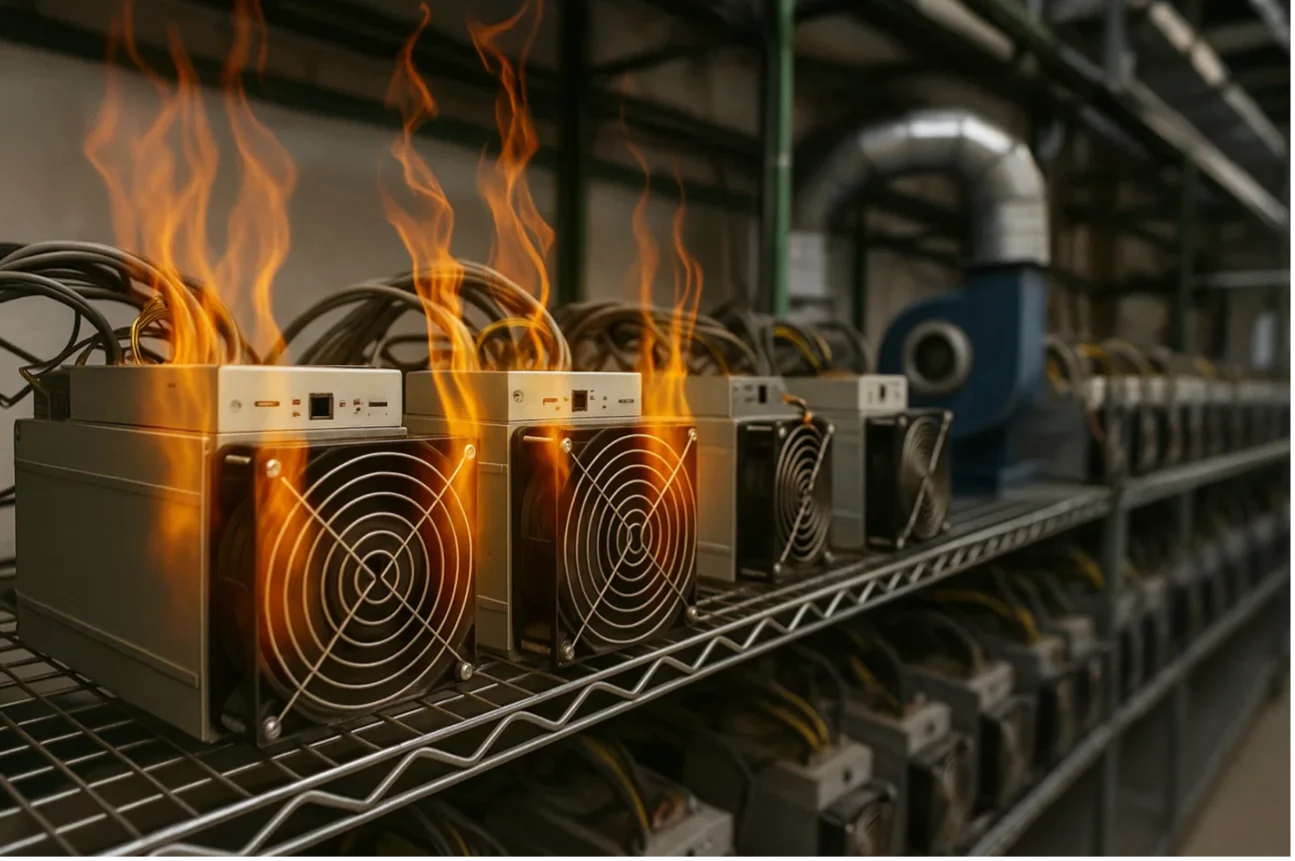
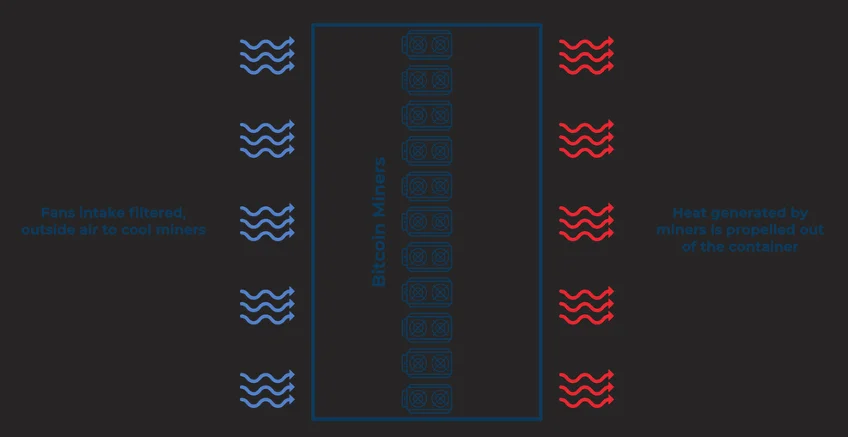
Air cooling remains the most widely deployed cooling method in Bitcoin mining today. The approach is relatively simple, operationally familiar, and easier to deploy across a broad range of environments. Air cooled systems also allow operators to perform maintenance and hardware replacement quickly, which remains an important advantage at large scale.
For many operations, air cooling continues to provide an effective balance between performance, infrastructure complexity, and deployment speed. Facilities in moderate climates with well designed airflow management can operate efficiently using traditional air cooled systems.
However, air cooling also presents limitations. High ambient temperatures, dust, humidity, and airflow imbalance can all affect machine performance and operational stability. As computing density increases, maintaining consistent thermal conditions becomes more difficult. Studies on data center efficiency consistently show that cooling performance becomes increasingly important as rack density rises (Uptime Institute 2023).
Why Liquid Cooling Is Gaining Attention
Liquid cooling is receiving growing attention as mining operators evaluate higher density infrastructure strategies. Unlike air, liquid transfers heat far more efficiently, allowing systems to maintain more stable temperatures under heavier computing loads.
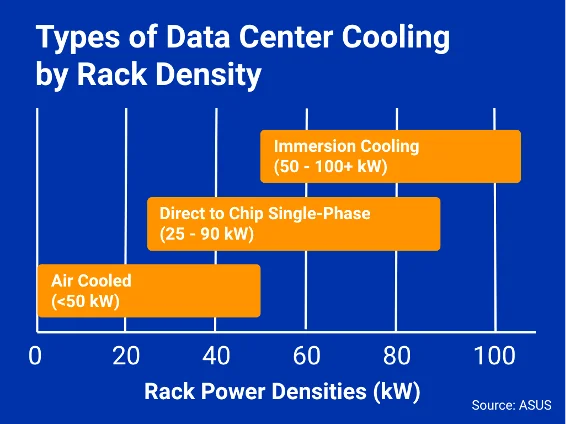
Several forms of liquid cooling are now being explored across the industry, including immersion cooling and direct to chip cooling systems. Similar approaches are also becoming more common in AI data centers, where GPU clusters generate extremely high thermal loads.
The primary advantage of liquid cooling is thermal consistency. Stable temperatures can improve operational efficiency, reduce environmental exposure, and support denser hardware deployments. In regions with challenging climates, liquid cooling may also reduce dependence on ambient air conditions.
At the same time, liquid cooling introduces additional infrastructure complexity. System maintenance, servicing procedures, and deployment requirements differ significantly from traditional air cooled operations. Industry research from the Open Compute Project notes that liquid cooled environments often require different facility planning standards and operational expertise compared to conventional air cooled systems (Open Compute Project 2023).
Cooling Strategy Is Ultimately an Infrastructure Decision
There is no universal cooling solution for Bitcoin mining. The right approach depends on operational goals, climate conditions, deployment scale, and long term infrastructure strategy.
Air cooling remains practical and effective for many deployments, particularly where environmental conditions are manageable and rapid deployment is prioritized. Liquid cooling is becoming more attractive in higher density environments where thermal management is increasingly difficult.
As Bitcoin mining and AI computing continue to evolve, both industries are placing greater emphasis on infrastructure efficiency and thermal management. Cooling is no longer simply an operational requirement. It is becoming a strategic design decision that directly influences scalability, reliability, and long term performance.
References:
Anderson Power. 2025. Air Cooling vs. Liquid Cooling The Future of Data Center Thermal Management.
https://www.andersonpower.com/us/en/about-us/news-and-events/air-cooling-vs–liquid-cooling–the-future-of-data-center-therma.html
ASHRAE. 2021. Thermal Guidelines for Data Processing Environments.
https://www.ashrae.org
International Energy Agency. 2024. Electricity 2024 Analysis and Forecast to 2026.
https://www.iea.org
MARA. 2025. Immersion Cooled Bitcoin Mining Explained.
https://www.mara.com/posts/immersion-cooled-bitcoin-mining-explained
Miner Source. 2025. Air Cooling vs. Water Cooling for Bitcoin Mining in 2025 Which Is Better.
https://minersource.shop/2025/11/10/air-cooling-vs-water-cooling-for-bitcoin-mining-in-2025-which-is-better
Uptime Institute. 2023. Data Center Cooling and Efficiency Trends.
https://uptimeinstitute.com
Open Compute Project. 2023. Advanced Cooling Solutions for High Density Computing.
https://www.opencompute.org
Follow us

COPYRIGHT (©) 2026 Hash House. All Rights Reserved.