
Common Myths About Bitcoin Mining Infrastructure
Bitcoin mining has evolved far beyond the early days of small rigs running in basements. Modern mining now operates on an industrial scale, supported by purpose built infrastructure such as containers, skids, power distribution systems, and advanced cooling solutions that keep operations efficient and reliable.For those new to the industry, this level of complexity can lead to misconceptions about what mining infrastructure truly requires. The following sections address several of the most common myths and provide a clearer understanding of how professional mining environments actually function.
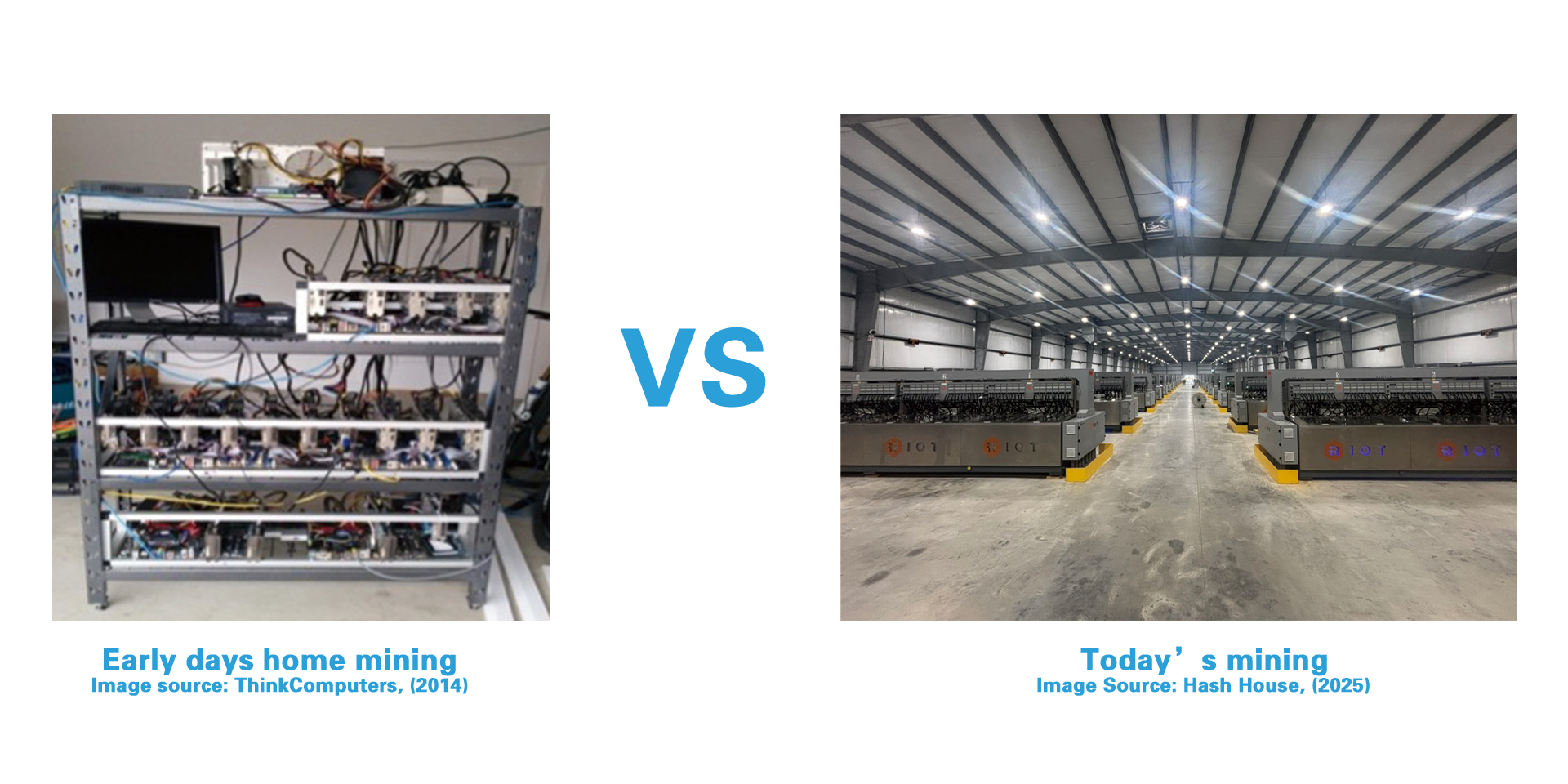
Myth 1 – Infrastructure Design Doesn’t Matter as Much as the Hardware
Reality: Many new entrants focus almost entirely on the miners themselves, comparing ASIC models, power consumption, and efficiency ratings with the assumption that stronger specifications will automatically deliver better results. In reality, true performance depends on the strength of the entire system design.A well engineered thermal distribution unit ensures that coolant flows evenly across all miners, maintaining stable operating temperatures and extending hardware lifespan. Consistent cooling, reliable power management, and proper protection from dust and moisture all play critical roles in sustaining uptime and keeping performance steady. Strong network, electrical, and cooling design work together as the core foundation of any mining site. Ultimately, it is the quality and balance of the entire infrastructure that transform capable machines into highly efficient, long lasting operations.
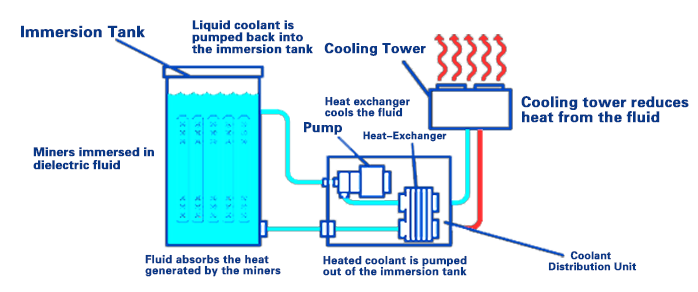
Single-Phase, Double-Loop Immersion Setup
Image source: Marathon Digital Holdings, “Immersion-Cooled Bitcoin Mining Explained” (2023)
Myth 2 – Every Mining Site Can Use the Same Setup
Reality: No two mining sites are the same. Local climate has a direct influence on how a setup performs and how it must be maintained. In hot regions, the priority is moving air and coolant efficiently to prevent overheating. In colder climates, the focus shifts toward managing condensation and maintaining system stability. In coastal areas, the main concern becomes humidity and corrosion, which require additional protection to keep mining equipment operating reliably. Our experience includes operating in both extremes, from conditions hot enough to warp tools to environments so cold they can freeze equipment in minutes. Each location offers its own lessons, reinforcing one core truth in mining infrastructure design: flexibility is everything.Modular containers and skids allow teams to adapt to temperature, humidity, or power constraints without delaying deployment. When the design is aligned with the environment, operations run smoother, last longer, and require less intervention.
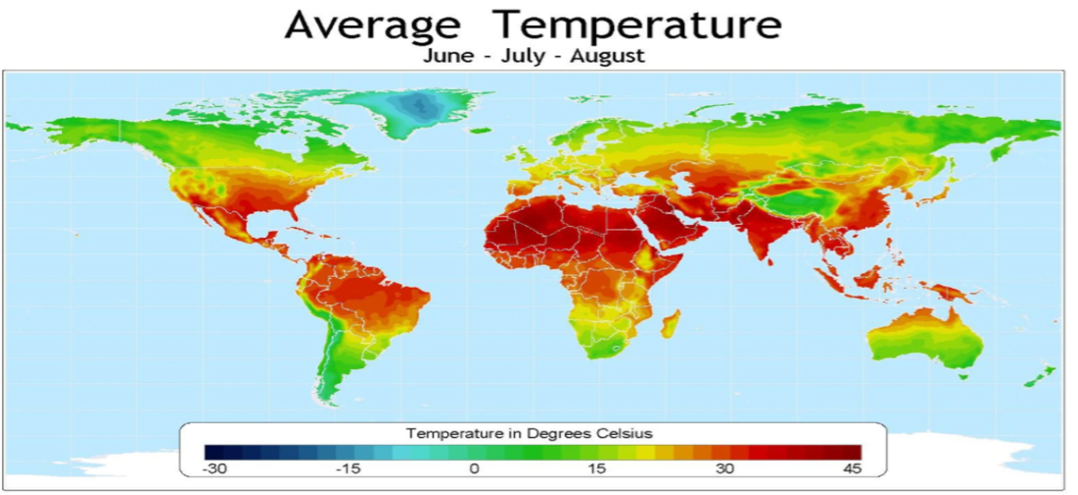
Average temperature June - August around the globe
Image source: Climate-Charts, (n.d.)
Myth 3 – The More Cooling, the Better
Reality: Cooling is essential to any mining operation, but more is not always better. Excessive airflow or overcooling can introduce new problems, including uneven temperature distribution, condensation, and unnecessary energy consumption.The real objective is balance. A well designed cooling system maintains consistent airflow and stable temperatures without overexerting itself. The best systems reject just enough heat to keep miners operating at their optimal range, ensuring efficiency, reliability, and long term performance. At Hash House, we support this approach by using high quality EC fans that automatically adjust their frequency based on cooling needs, which helps maintain efficient performance and improves overall PUE.
Cooling Level | Miner Temperature (°C) | Power Consumption (% of baseline) | System Efficiency (% of Peak) | Source |
Undercooling (Insufficient Heat Rejection) | 75 | 100 | 80 | Based on ASIC miner thermal performance data; higher chip temps reduce hash rate efficiency (Bitmain Technologies, Antminer S19 Series Manual, 2022). |
Optimal Cooling (Balanced Heat Rejection) | 65 | 90 | 100 | Reflects ASHRAE TC 9.9 recommended inlet air range (18-27°C), corresponding to ~60-70°C ASIC core temp for optimal efficiency (ASHRAE TC 9.9, Thermal Guidelines, 2021). |
Overcooling (Excessive Cooling) | 50 | 120 | 85 | Based on Uptime Institute findings showing up to 30% higher facility energy use from overcooling without reliability gains (Uptime Institute Data Center Energy Efficiency Report, 2023). |
Myth 4 – Mining Only Works in Cold Places
Reality: Cooler regions naturally make temperature control easier, but successful mining is not limited to cold climates. Active operations exist everywhere from Alaska to Texas and the UAE. The key lies in choosing the right cooling strategy for each environment.In hot, dry regions, hybrid wet and dry systems or evaporative coolers are often used to manage higher temperatures when dry coolers alone are not enough. Locations such as the UAE rely on these combinations to maintain efficiency while minimizing water consumption. Across many climates, hydro and immersion cooling systems are gaining ground because they provide precise temperature control, quiet operation, and superior hardware protection by isolating miners from air and dust.When properly designed, these systems deliver stable performance and longer equipment lifespan, proving that with smart infrastructure, mining can operate efficiently almost anywhere in the world.
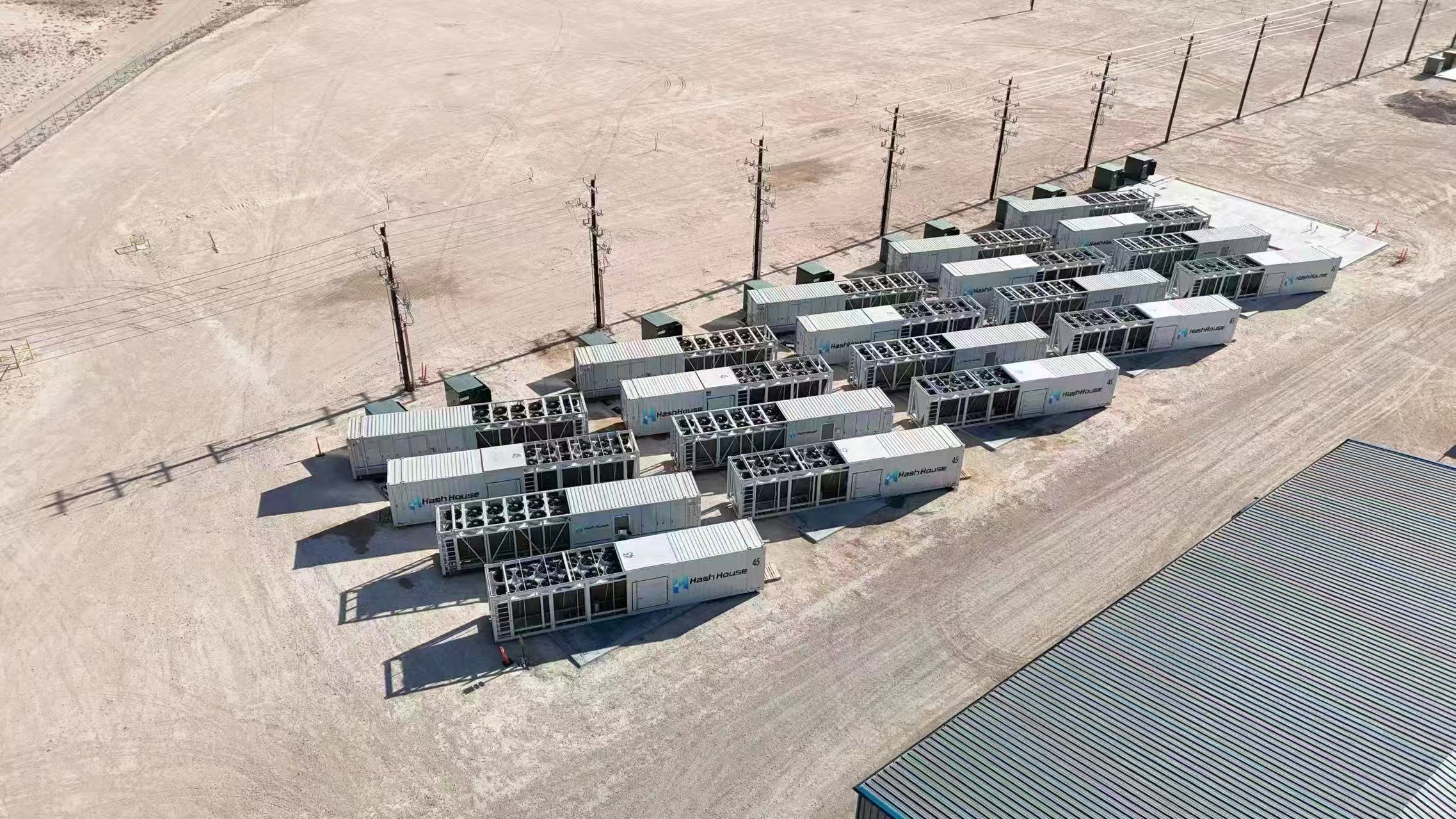
Hash House’s product deployment in the extreme desert heat of Texas
Image source: Hash House, (2025)
Myth 5 – Once a Site Is Up and Running, It Takes Care of Itself
Reality: Even the most advanced mining operation requires ongoing attention. Filters clog over time, fans experience wear, and seasonal changes can affect how systems perform. Regular monitoring of airflow, temperature, and power usage helps identify small issues before they lead to costly downtime.A mining site should be viewed less as a static facility and more as a dynamic machine that performs best with consistent care. Routine maintenance, data tracking, and proactive system checks keep operations running efficiently and extend the life of critical components.
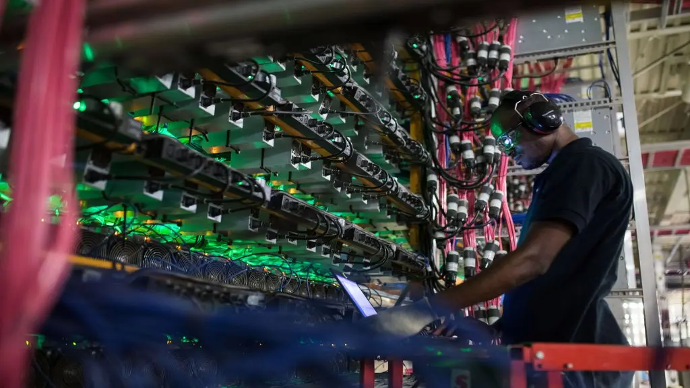
Maintenance crew member conducting regular services at a mining site
Image source: “Technician monitors cryptocurrency mining rigs at a Bitfarms facility”, Bitfarms, (2021)
Final Note
As Bitcoin mining continues to expand, the infrastructure supporting it is advancing just as quickly. Understanding the fundamentals of design, cooling, and site conditions helps new operators make informed decisions and avoid costly mistakes. Modern mining is no longer just about the hardware, it’s about building efficient, reliable systems that perform consistently in any environment.For those entering the mining space or looking to optimize their setup, Hash House specializes in modular cooling containers and skids engineered for diverse operating conditions. From early stage design through ongoing maintenance, our team provides practical, results-driven solutions that ensure long-term performance and value from the very start.
References:
ASHRAE Technical Committee 9.9. Thermal Guidelines for Data Processing Environments, 5th Edition, 2021.
Retrieved from: https://www.ashrae.org/File%20Library/Technical%20Resources/Bookstore/tc99-guidelines-2021.pdf
Bitfarms. “Technician monitors cryptocurrency mining rigs at a Bitfarms facility in Saint-Hyacinthe, Quebec.” CoinDesk,11 Nov. 2021.
Retrieved from: https://www.coindesk.com/business/2021/11/11/bitfarms-buys-24mw-crypto-mining-facility-in-washington-state-for-26m
Bitmain Technologies. Antminer S19 Series Operation and Maintenance Manual, 2022.
Retrieved from: https://shop.bitmain.com/support/download?product=Antminer%20S19Climate-Charts.com. (n.d.).
World Climate Maps. Retrieved November 4, 2025.
Retrieved from: https://www.climate-charts.com/World-Climate-Maps.html
Marathon Digital Holdings. (2023, February 27). Immersion-Cooled Bitcoin Mining Explained. Retrieved November 4, 2025.
Retrieved from: https://www.mara.com/posts/immersion-cooled-bitcoin-mining-explained
ThinkComputers. (2014, February 18). Insane Crypto-Currency Mining Rigs. Retrieved November 4, 2025.
Retrieved from: https://thinkcomputers.org/insane-crypto-currency-mining-rigs
Uptime Institute. Data Center Energy Efficiency and Overcooling Report, 2023.
Retrieved from: https://uptimeinstitute.com/resources/research-and-reports/energy-efficiency-overcooling
