
Connecting Solar Power and Bitcoin Mining
Part 2. Renewable Energy Mining Series
In the previous article, we covered the fundamentals of how solar power works and why it has become a major part of today’s energy landscape. The next step is understanding how solar power connects with bitcoin mining in real world operations. While the two may seem unrelated at first, their relationship becomes clearer when viewed through flexibility, cost structure, and infrastructure design.
This article focuses on how solar power is used in mining today, where it works well, and where the real tradeoffs exist.
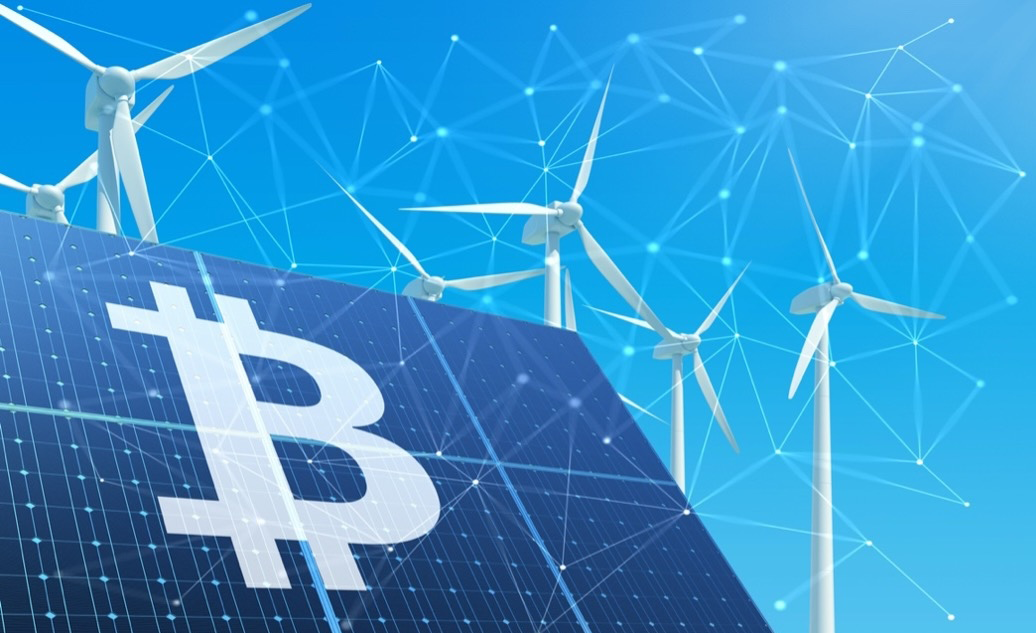
(Image source: Soluna Computing)
Solar power produces electricity in a steady and predictable window during the day. Output builds in the morning, reaches its highest levels around midday, and gradually tapers off toward evening. Bitcoin mining does not depend on fixed production schedules, which makes it well suited to this type of generation profile. Mining equipment can operate during periods of strong energy availability without needing to maintain constant output around the clock.
This alignment allows mining operations to be designed around when energy is most available rather than forcing generation to meet demand at all hours. In regions with large solar installations, this approach can improve overall energy utilization by matching flexible consumption with natural production patterns. Rather than treating variable generation as a limitation, mining can be structured to work within those boundaries.
Bitcoin mining differs from many industrial processes because its electrical demand can be adjusted without disrupting downstream operations. When power availability is high, mining systems can increase activity. When power becomes limited, they can reduce output or pause operations based on site conditions and operational strategy. This behavior allows mining to function as a responsive load rather than a fixed one.
Flexible loads are increasingly discussed in energy planning as renewable generation grows. The ability to adjust consumption helps operators respond to changes in supply without requiring constant overbuild of generation or infrastructure. Mining’s ability to respond quickly to these changes is one of the reasons it is being evaluated alongside other controllable loads in renewable energy environments.
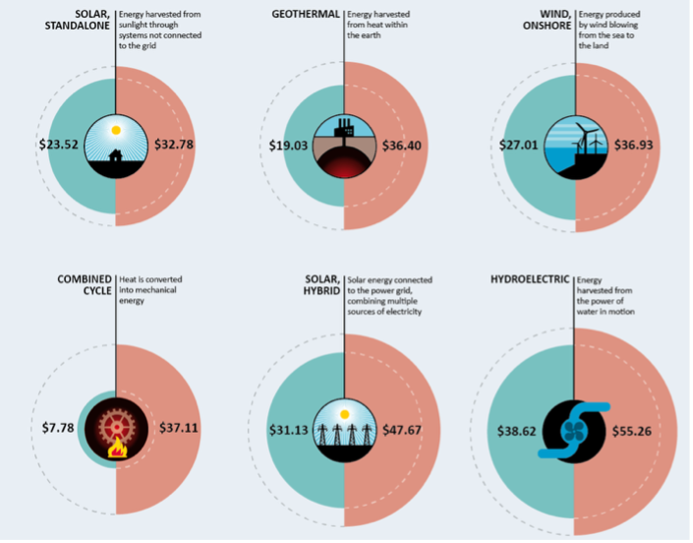
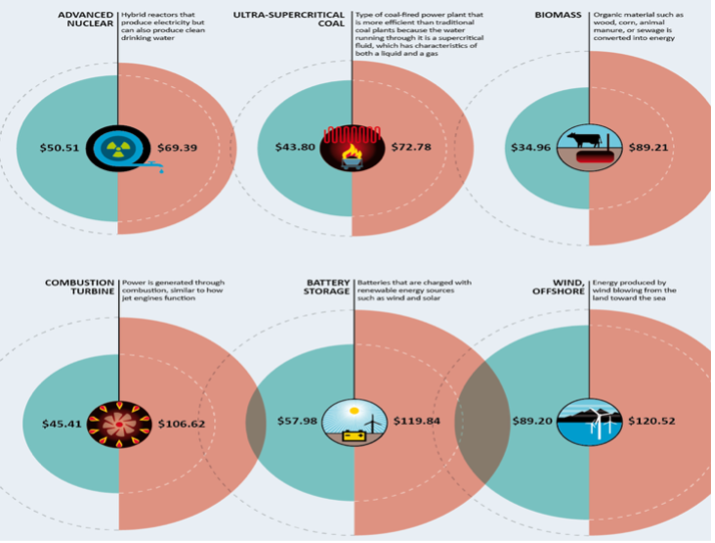
(Image source: SolarPower.Guide)
There are two primary ways solar power can be used for mining. One approach stores energy in batteries and releases it later. This extends operating hours but adds cost and complexity. Storage systems introduce efficiency losses and degrade over time. Industry analysis commonly evaluates these systems using levelized cost of storage, which reflects equipment cost, efficiency losses, and lifetime performance National Renewable Energy Laboratory 2023.
The second approach is direct solar use. In this model, solar panels generate electricity that is immediately converted and used by mining equipment and cooling systems. This avoids storage losses and reduces system complexity, but limits mining activity to periods when solar power is available.
This tradeoff is central to solar powered mining. Storage increases operating hours. Direct use prioritizes lower energy cost during daylight production.
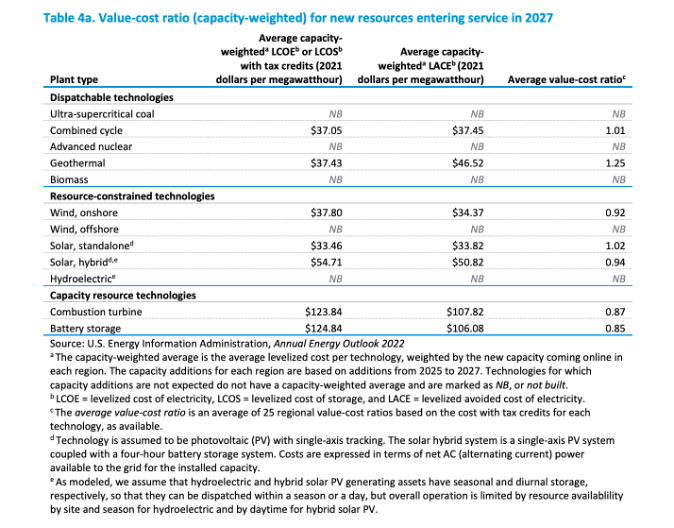
(Image source: U.S. Energy Information Administration)
When comparing solar powered mining to grid connected mining, cost structure often matters more than raw uptime. Grid connected facilities typically require substations, interconnection studies, and long development timelines. Once operational, they provide near continuous power but remain exposed to grid pricing, congestion, and curtailment regulations.
Direct solar powered mining requires upfront investment in panels and balance of system equipment, but operating costs are low once the system is built. In sunny regions such as Texas or Arizona, solar installations can deliver strong daytime production for much of the year. Weather does reduce output on some days, and seasonal variation is unavoidable, but long term averages are well understood and widely modeled National Renewable Energy Laboratory 2023.
Solar powered mining typically runs fewer hours per day than grid connected operations. However, lower energy cost during operating hours can offset reduced uptime. For mining operations that prioritize cost control and flexibility over continuous operation, this tradeoff can be economically rational.
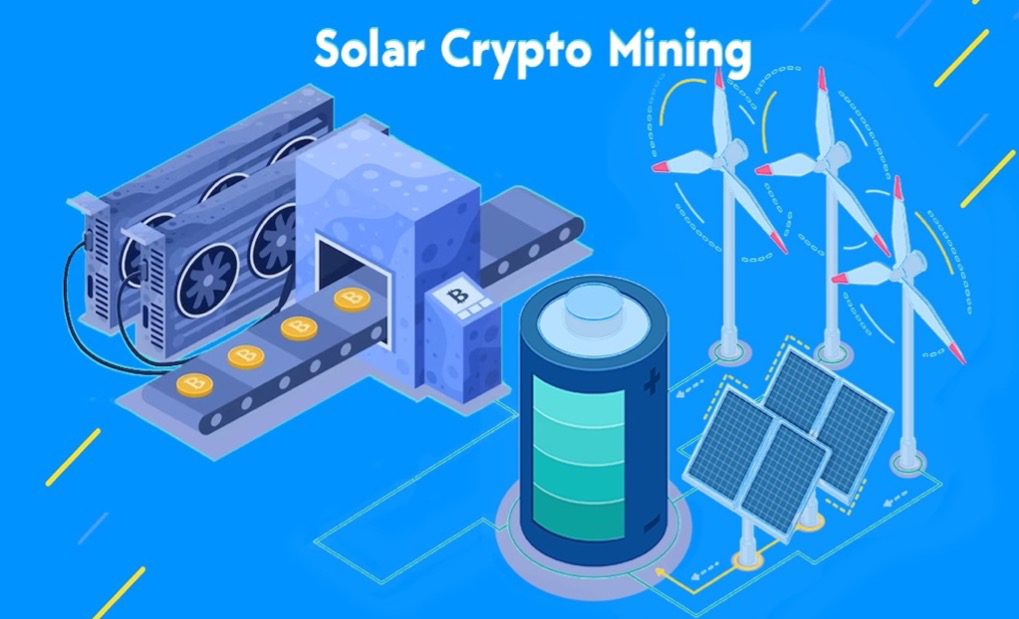
(Image source: WoolyPooly)
Whether solar power is used directly or alongside the grid, infrastructure design plays a critical role. Power distribution, cooling systems, and control strategies must be built to handle variable loads safely and efficiently. Facilities designed around energy availability rather than constant output tend to operate more smoothly in solar integrated environments.
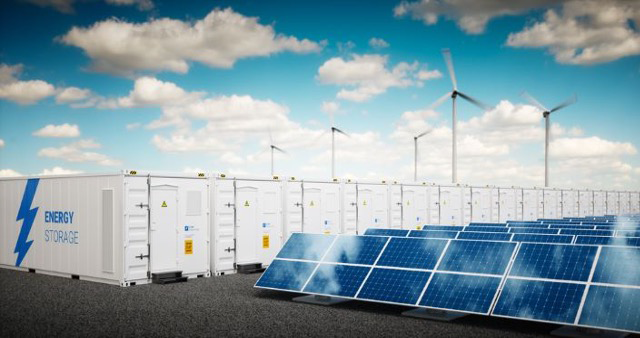
(Image source: Elum Energy blog)
Site selection and layout also matter. Guidance from the U.S. Department of Energy highlights the importance of land use, grid access, and system planning for large scale solar projects U.S. Department of Energy 2024. When mining infrastructure is planned with these considerations in mind, it can be better aligned with how solar generation behaves over time.
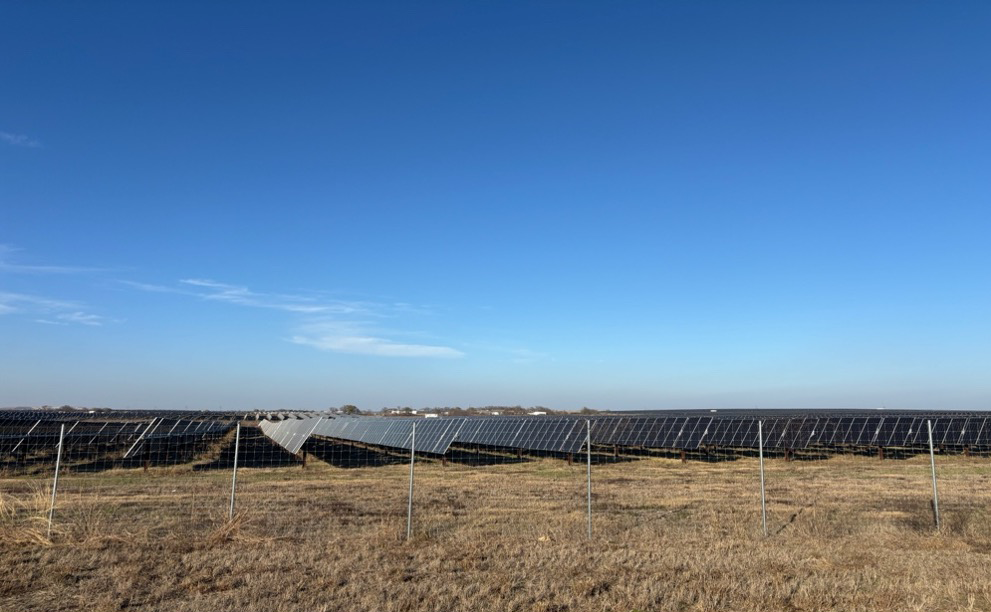
(Major Solar Farm in West Texas)
Solar powered bitcoin mining is not about replacing the grid or achieving nonstop operation. It is about using energy intentionally. Some operations will choose continuous grid power. Others will prioritize lower cost solar generation and accept variable output. Both approaches can work when infrastructure and operating strategy are aligned.
As solar capacity continues to expand, flexible energy users like bitcoin mining will play a growing role in how renewable power is consumed. Understanding the balance between cost, uptime, and infrastructure design allows operators to build systems that match their goals and perform reliably over time.
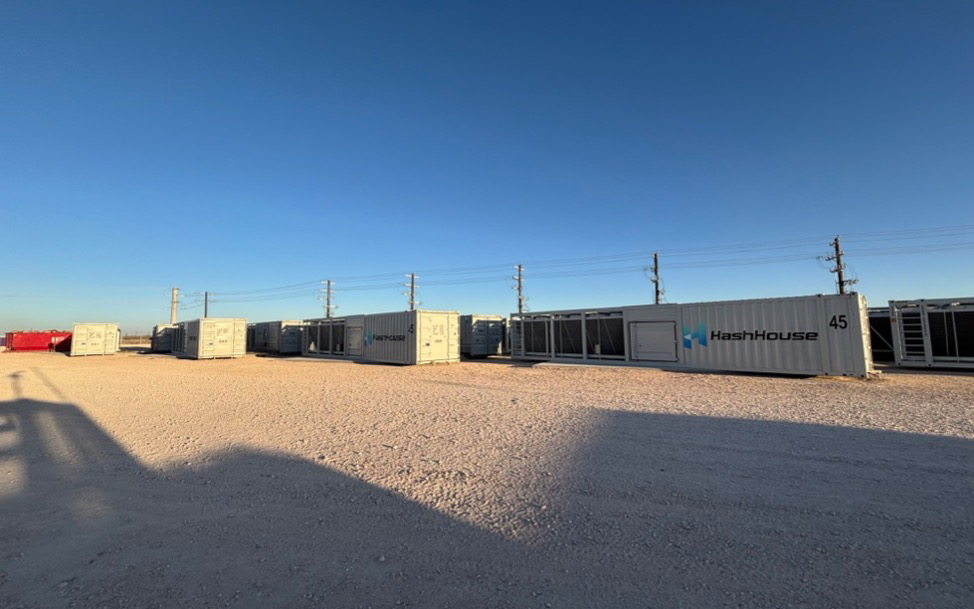
(Hash House West Texas deployment, immersion & hydro)
References:
Elum Energy. 2025. EPC Battery Power Plant. Elum Energy blog.
https://elum-energy.com/blog/epc-battery-power-plant/
Florida Solar Energy Center 2025. How a PV System Works. University of Central Florida. https://energyresearch.ucf.edu/consumer/solar-technologies/solar-electricity-basics/how-a-pv-system-works/
National Renewable Energy Laboratory 2023. Photovoltaic System Performance Basics.
https://www.nrel.gov
PV Tech 2022. 87 MW solar powered bitcoin mining centre becomes operational in Texas.
https://www.pv-tech.org/87mw-solar-powered-bitcoin-mining-centre-becomes-operational-in-texas/
Soluna Computing. 2025. Can Bitcoin be a Catalyst for Renewable Energy? Soluna Computing blog. https://www.solunacomputing.com/blog/can-bitcoin-be-a-catalyst-for-renewable-energy/
SolarPower.Guide. 2025. Energy ranked by cost per megawatt hour.
https://solarpower.guide/solar-energy-insights/energy-ranked-by-cost
U.S. Department of Energy 2017. Confronting the Duck Curve.
https://www.energy.gov/cmei/articles/confronting-duck-curve-how-address-over-generation-solar-energy
U.S. Department of Energy 2024. Large Scale Solar Siting Resources. https://www.energy.gov/eere/solar/large-scale-solar-siting-resources
U.S. Energy Information Administration. 2024. Battery storage deployment and cost overview. https://www.eia.gov/todayinenergy/detail.php?id=55419
WoolyPooly. 2025. Solar Crypto Mining. WoolyPooly blog.
https://woolypooly.com/en/blog/solar-crypto-mining
