
Navigating a Bitcoin Mining Downturn
Building Through the Downcycle
How to Think About Bitcoin Mining When Prices Are Low
Bitcoin price volatility is nothing new, but sharp downturns always test the industry. When prices fall quickly, uncertainty increases across the board. This affects individual holders, public mining companies, and private operators alike. For miners in particular, lower prices put immediate pressure on margins, especially in regions with high electricity costs or limited operational flexibility.
This article is not about where the price is headed. Instead, it focuses on how mining operators can think clearly during a downturn, what practical levers still matter, and why some teams use these periods to prepare rather than retreat.

(Image Source CNBC)
What Changes When Price Drops
When bitcoin prices decline, the economics of mining change quickly. Revenue per terahash falls while many operating costs remain fixed. Electricity becomes the dominant variable, and sites with higher power prices feel the impact first. This relationship between mining profitability and electricity cost is consistently reflected in industry research and mining economics models (Hashrate Index 2024).
As margins compress, less efficient operations are often forced to curtail or shut down. This pattern has appeared repeatedly across prior market downturns. Lower prices also increase scrutiny on uptime, cooling performance, and power efficiency, turning operational discipline into a requirement rather than a competitive edge.
Operational Levers That Still Matter
Even during difficult market conditions, miners retain control over several critical levers. Power flexibility remains one of the most important. In regions with dynamic electricity pricing, miners routinely adjust load or curtail operations when power prices spike. This behavior has been widely reported, particularly in markets that support demand response programs (CoinTelegraph 2023).
Efficiency improvements also matter more during downturns. Cooling optimization, airflow management, and temperature stability help operators extract maximum performance from existing hardware. Small gains in uptime or energy efficiency can meaningfully affect cash flow when margins are thin.
Operational visibility is just as important. Real time monitoring of power draw, temperatures, and equipment performance allows teams to respond early rather than react after losses accumulate.
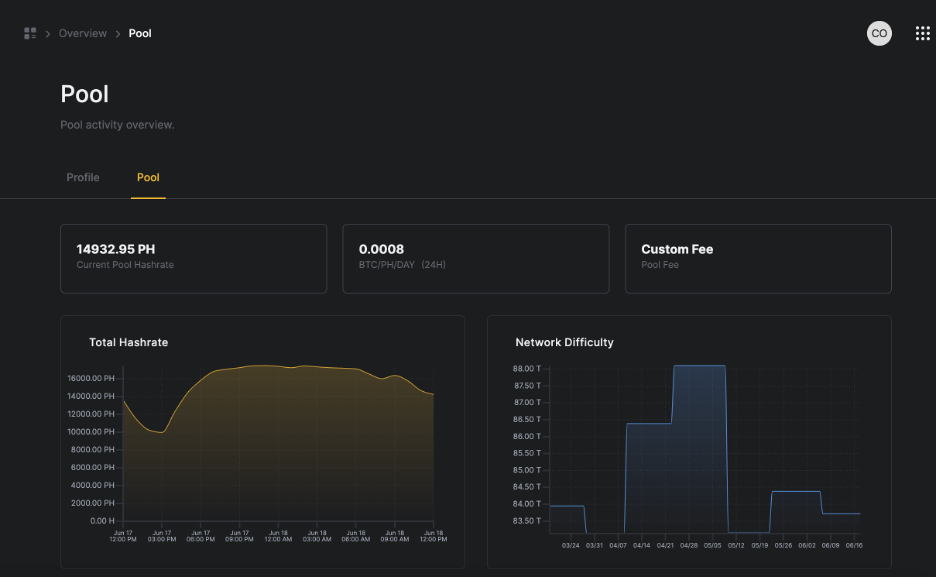
(Image source Hashrate Index)
Power Strategy Matters More Than Hardware
In low price environments, power strategy often outweighs hardware selection. While newer machines are more efficient, access to competitively priced electricity determines whether those machines can operate sustainably.
Some operators rely on fixed price power contracts for predictability. Others use spot pricing, accepting volatility in exchange for the ability to reduce load during high price periods. Industry analysis shows that power procurement strategy is one of the defining factors in long term mining resilience, especially during periods of market stress (Hashrate Index 2024).
Understanding how electricity pricing structures interact with mining economics is essential when margins leave little room for error.

(Image source Constellation Energy)
Curtailment Is a Tool, Not a Failure
Curtailment is often misunderstood as a sign of distress. In practice, it is a strategic tool. Many mining operators intentionally curtail during periods of high electricity prices or grid stress to avoid operating at a loss.
Public reporting has shown miners reducing output during extreme weather events or peak demand periods while remaining operational long term (CoinTelegraph 2023). This flexibility reflects operational maturity rather than weakness.
By preserving capital during unfavorable conditions, miners maintain the ability to resume operations when economics improve.
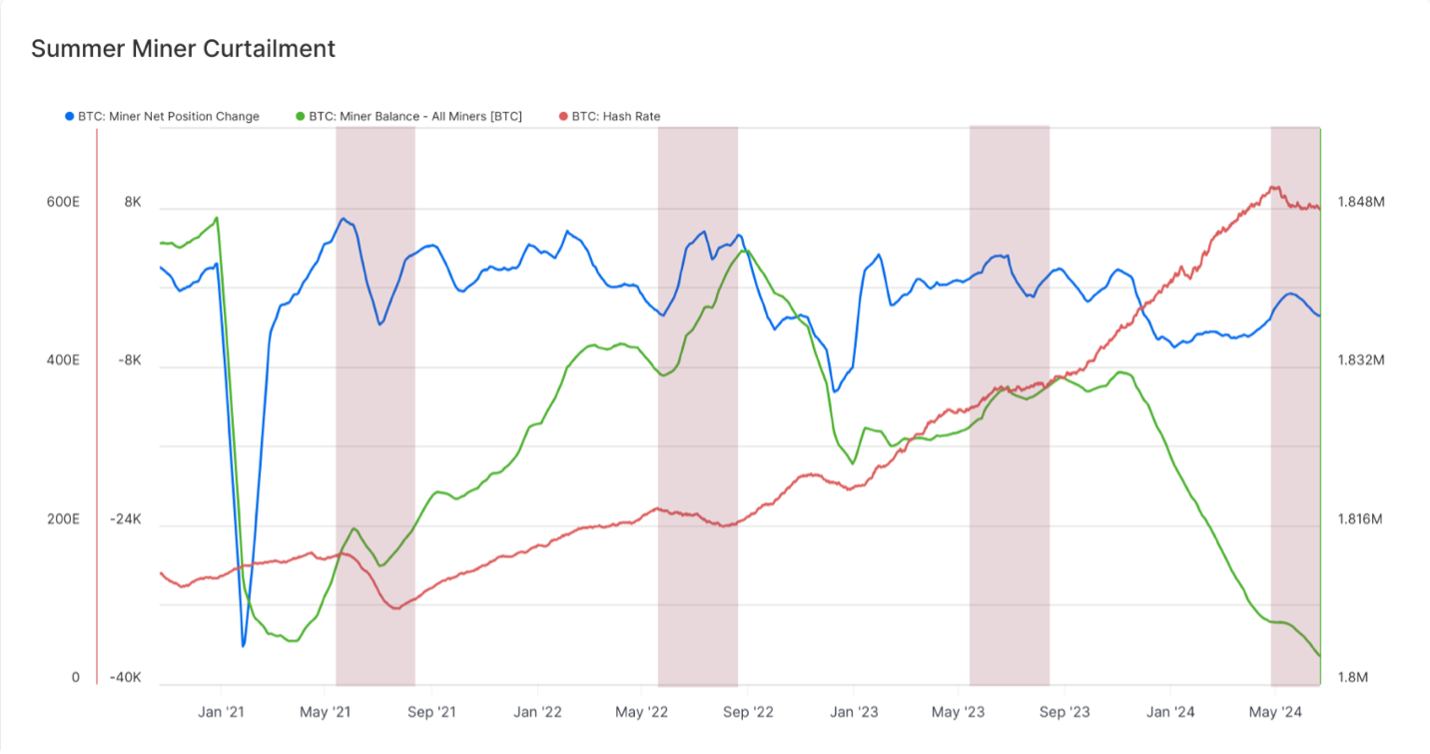
(Image source SimpleMining)
Is a Down Market a Time to Invest in Infrastructure
Mining infrastructure takes time to build. Site development, permitting, power delivery, cooling systems, and deployment often require months or longer. During strong markets, this timeline becomes a constraint. During downturns, it can align more naturally with planning and construction cycles.
Some operators view low price environments as a window to design and build deliberately. With less pressure to deploy immediately, teams can focus on efficiency, reliability, and long term power strategy. When market conditions improve, infrastructure planned during quieter periods may be ready to operate.
There are real risks. Capital availability is often limited during downturns, and not every operation can invest ahead of revenue recovery. Still, academic research and historical data show that bitcoin has experienced repeated cycles of expansion and contraction, often around changes in issuance and broader market behavior (ScienceDirect 2024). While past cycles do not guarantee future outcomes, they reinforce that mining is a long horizon business.
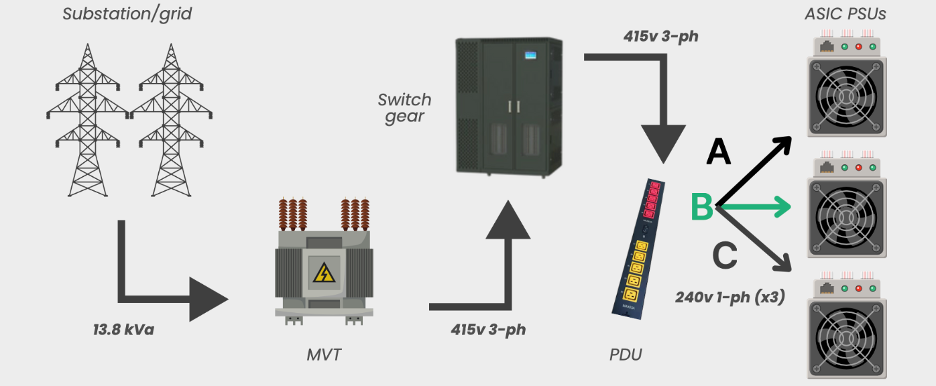
(Image Source BitDeer)
Final Thoughts
Down markets are uncomfortable, but they are also clarifying. They force mining operations to focus on fundamentals such as power cost, efficiency, and operational discipline. They also separate short term participation from long term strategy.
For some operators, the right move is to pause, optimize, and protect capital. For others, it is a time to plan and build infrastructure that can perform when conditions improve. There is no single correct response.
What matters is making decisions grounded in present realities rather than future predictions. In bitcoin mining, resilience is built long before the market turns.
References:
Bitbo Charts. 2024. Bitcoin halving dates and issuance schedule.
https://charts.bitbo.io
BitDeer. 2025. The Future of Industrial Scale Bitcoin Mining.
https://www.bitdeer.com/news/the-future-of-industrial-scale-bitcoin-mining
CNBC. 2026. Bitcoin price today 70000 in focus.
https://www.cnbc.com/2026/02/05/bitcoin-price-today-70000-in-focus.html
Constellation. 2025. Fixed vs Variable Energy Rates Explained.
https://www.constellation.com/energy-101/fixed-vs-variable-energy-rates.html
CoinTelegraph. 2023. Bitcoin miner production falls amid power curtailment.
https://cointelegraph.com
Hashrate Index. 2024. Bitcoin Home Mining Guide 2024.
https://hashrateindex.com/blog/bitcoin-home-mining-guide-2024
Hashrate Index. 2024. Mining profitability and energy market analysis.
https://hashrateindex.com
ScienceDirect. 2024. Stylized facts of bitcoin price cycles and halving events.
https://www.sciencedirect.com
